
What Nassau County Property Tax Records Show
Nassau County keeps these records apart. Assessment values, recorded deeds, parcel maps, and tax administration each sit in their own official system. Match the parcel number and address across sources, and read each answer by the purpose that record serves.
| Field | What It Shows | Where |
|---|---|---|
| Assessed value | official record detail | official Nassau County record details |
| Market / appraised value | official record detail | official Nassau County record details |
| Exemptions | official record detail | official Nassau County record details |
| Tax bill & status | official record detail | official Nassau County record details |
| Taxing districts | official record detail | official Nassau County record details |
The systems answer different questions. Nassau County separates assessment rolls, deed records, GIS parcel geography, and tax administration. Match the SBL and address across them, and apply each result according to the purpose and limits of that record.
Looking Up a Nassau County Tax Bill
A tax bill starts with jurisdiction. Nassau County assessment, deed, mapping, and tax systems each carry one piece of the answer. Confirm the parcel number and address in every source, since each record speaks only to its own purpose.
- Open the Land Records Viewer and search the street address without a directional prefix or street suffix. by address or parcel]
- Copy the section, block, and lot from the selected parcel and note the Town and Village fields.
- Search the County Clerk index by party name or reconciled SBL and inspect the latest deed.
- Compare assessment, sale, tax, and parcel-map details, then check the relevant city or town permit office.
- Assessed value
- official record detail
- Mill rate / levy
- official record detail
- Homestead exemption
- official record detail
- Tax lien
- official record detail
Appealing a Nassau County Assessment
An appeal rests on the right record. Nassau County houses assessment, deeds, parcel geography, and tax administration in separate systems. Check the parcel number and address against each source, and use each finding within the limits of that record.
Appeal window. Use these public records for lawful property research and verify important conclusions with the custodian, a title professional, or a licensed surveyor. Never use owner information to harass or harm anyone. with the official Nassau County record details; missing the window means waiting for the next cycle.]
Nassau County Splits Assessment, Billing, and Delinquency
Assessment and collection are different jobs here. The Nassau County Department of Assessment builds the annual roll, and its Land Records Viewer displays parcel value and exemption information. Current bills sit with the municipal receiver. Delinquent property taxes go to the Nassau County Treasurer. So a property tax search needs the municipality named before any payment or balance source is chosen.
The viewer's Town and Village fields resolve that question. Note the roll year, and mark whether a value is tentative or final. A paid current bill can still leave older liens behind, and a delinquent-tax result is no substitute for the municipal current-bill record. The official delinquent-tax lookup takes an address or Parcel ID.
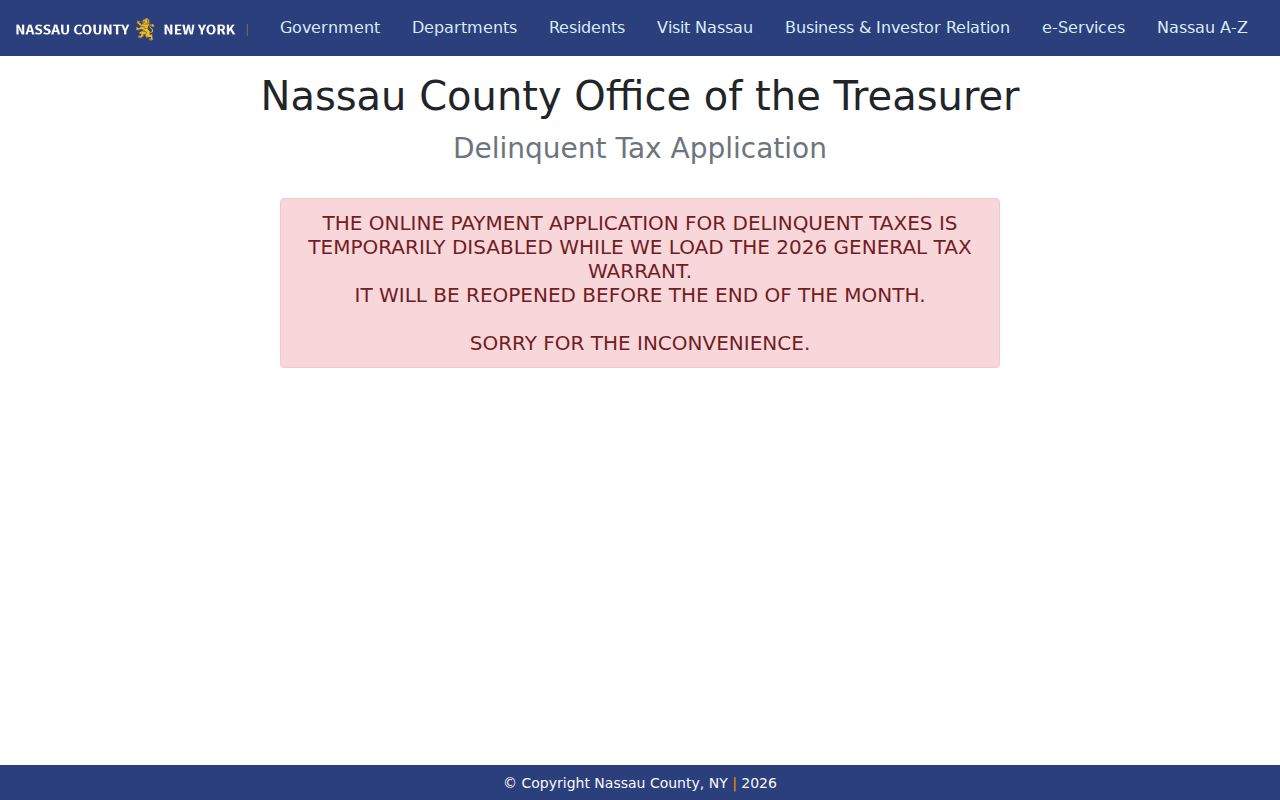
Keep the parcel identifier beside a verified address. That pairing is what makes a Nassau County tax status check hold up.
Read Nassau Assessment Values in Context
Labels carry weight on a Nassau assessment card. One card can list fair market value, effective market value, assessed value, level of assessment, class, exemptions, and a tentative or final status for the year. None of those figures mean the same thing. The assessed value drives tax administration, a recorded sale documents a past deed transfer, and an appraisal is a professional opinion tied to a date and purpose.
Exemptions shift taxable treatment, not the parcel itself. Check the exemption year and its current status instead of copying an old benefit forward. Watch the tax-status date too. Payments and adjustments land after a roll is published, so a figure dated earlier can mislead.
Challenge a Nassau County Assessment Through ARC
ARC is the starting point. The Assessment Review Commission handles Nassau County assessment challenges administratively through its AROW system. Official instructions allow online, mail, or in-person filing. No filing fee is charged. AROW also offers an address or parcel search plus a sales locator for one- and two-family properties. Treat those results as research aids rather than appraisals.
A strong file holds the challenged roll, parcel characteristics, comparable search criteria, sale records, photographs, and the filed application in one place. File within the published period. Payment questions still belong to the tax receiver or the Treasurer, since ARC reviews assessments rather than collecting bills, and the official ARC filing instructions spell out the channels and the no-fee rule.
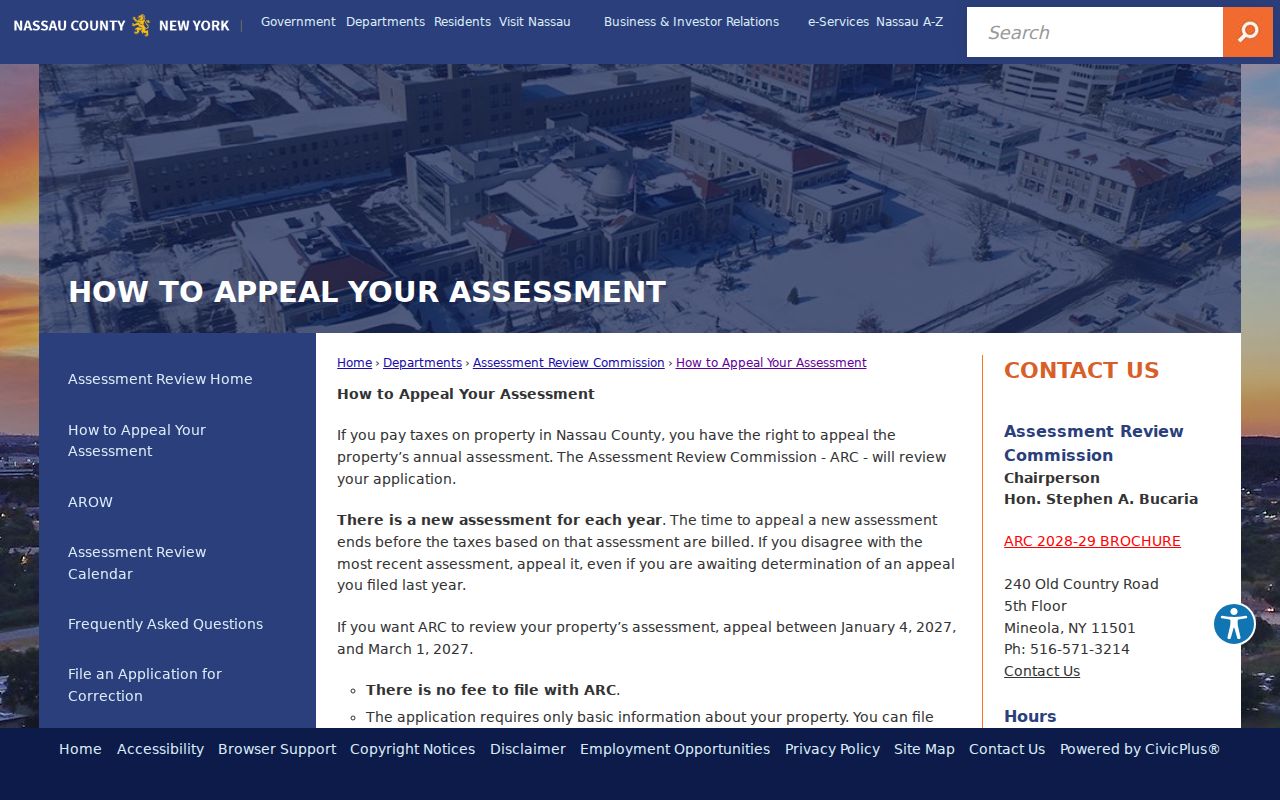
The captured instructions help distinguish the assessment-review process from tax payment and deed research.
Assemble a Year-Specific Nassau County Tax File
Start with the roll year. A complete Nassau County tax file also lists parcel class, the SBL, situs address, owner of record field, and tentative or final status. Save every value with its label. Fair market, effective market, assessed, and taxable figures each answer a different question. Then log each exemption and the year it appears. A benefit changes taxable treatment without changing the property, and an expired or pending exemption should never ride into a new year without verification.
Jurisdiction comes next. The viewer's Town and Village fields settle it. City, town, village, and school taxes can follow different schedules and payment channels. The county delinquent-tax page names the municipal scope of its process, and the Treasurer lookup takes an address or Parcel ID. Ask the receiver for the current bill. Ask the Treasurer about delinquency. No single screen covers every period.
Sale history is its own check. A deed shows a transfer and its consideration, while the assessment card may attach a condition or unusual-factor code to a sale. Family, trust, estate, and corrective transfers can close at zero or another figure far from an arm's-length market sale. AROW comparables are informational too. Match property class, location, date, and physical features before using any transfer to question an assessment.
Point an ARC challenge at the assessed parcel and roll. Keep the filed application, evidence, comparable selection, photographs, and determination together. The no-fee administrative process is not a payment plan or a deed correction. Characteristics disputes need permits and certificates. Ownership questions need the latest deed, boundary questions need the recorded map and survey, and sending each issue to its own source builds a cleaner appeal record.
Confirm a Nassau County Tax Result Before Payment
Pay a Nassau County tax bill only through the official receiver or Treasurer channel. That channel must be tied to the parcel's jurisdiction. Check the address and SBL first. Confirm the tax period before you pay anything. Read whether the amount is current, delinquent, adjusted, or caught up in another proceeding. Those labels change what you actually owe. Keep your receipt and confirmation number from the payment channel that office provides.
An official-looking letter proves nothing. Nassau warns about property-record solicitations, and tax demands deserve the same caution. Verify the sender against the government's published page or telephone number before sending money. A parcel address, a logo, or an urgent deadline is not evidence of a county debt. The same goes for an unknown vendor. Lien and title questions may also call for the Clerk index. Those questions can also call for legal advice beyond the tax account itself.
Tax note: Verify the parcel and period before paying.