
How to Find Who Owns a Nassau County Property
Nassau County keeps its property records in separate official systems. Assessment, land documents, parcel geography, and tax administration each live with a different office. Match the SBL and address across those sources, and weigh every result by what that record was built to do.
- Open the Land Records Viewer and search the street address without a directional prefix or street suffix.
- Copy the section, block, and lot from the selected parcel and note the Town and Village fields.]
- Search the County Clerk index by party name or reconciled SBL and inspect the latest deed.
- Compare assessment, sale, tax, and parcel-map details, then check the relevant city or town permit office.
Where Nassau County Owner Information Comes From
Owner data in Nassau County comes from several systems. Each one does a different job. Assessment rolls, recorded deeds, parcel maps, and tax administration sit with different offices, so comparing the SBL and address across them keeps a property search honest.
| Source | Owner Info It Gives | Access |
|---|---|---|
| Assessor / tax roll | official record detail | free public portal |
| Recorder deed index | official record detail | free index search |
| Secretary of State | official record detail | official record detail |
| GIS parcel viewer | official record detail | free public viewer |
No single file answers everything. Nassau County splits assessment, land documents, parcel geography, and tax work across official systems that update on their own schedules. Check the SBL and address in each, and let every record speak to its own purpose and limits.
What "Who Owns This Property" Cannot Tell You
Every record has limits. Nassau County systems answer only part of the ownership question. Assessment, land documents, parcel geography, and tax administration each capture a slice of the picture, so weigh each result against the purpose and limits of the record behind it.
Lawful use. Use these public records for lawful property research and verify important conclusions with the custodian, a title professional, or a licensed surveyor. Never use owner information to harass or harm anyone.
Resolve the Nassau County Parcel Before Naming an Owner
Open the Land Records Viewer. Enter the house number and the street stem. Confirm the full situs address, Town, Village, school district, and SBL before going further. Nassau ZIP codes and postal place names cross municipal lines. Those jurisdiction fields beat the mailing city.
The card's "Last Known Owner Name" is a handy current-roll field. Keep it with the roll year and its tentative or final status. Do not confuse the tax mailing address with the property address. Do not assume it identifies an occupant.
Confirm Who Owns Nassau County Property With the Latest Deed
Take the owner spelling and the reconciled SBL into the County Clerk index. Search the grantee, not just the parcel. Then inspect the most recent deed that actually transfers the property, because mortgages, satisfactions, liens, and assignments can name parties without vesting ownership.
What if the assessment roll and the deed disagree? Compare dates first. A recently recorded deed may not yet show on an annual roll, and estate, trust, or entity transfers can pull in related instruments. Record the recording date, grantor, grantee, deed type, and the liber/page or instrument reference.
The official assessment detail example displays the value, roll, and tax-status context that surrounds an owner field.
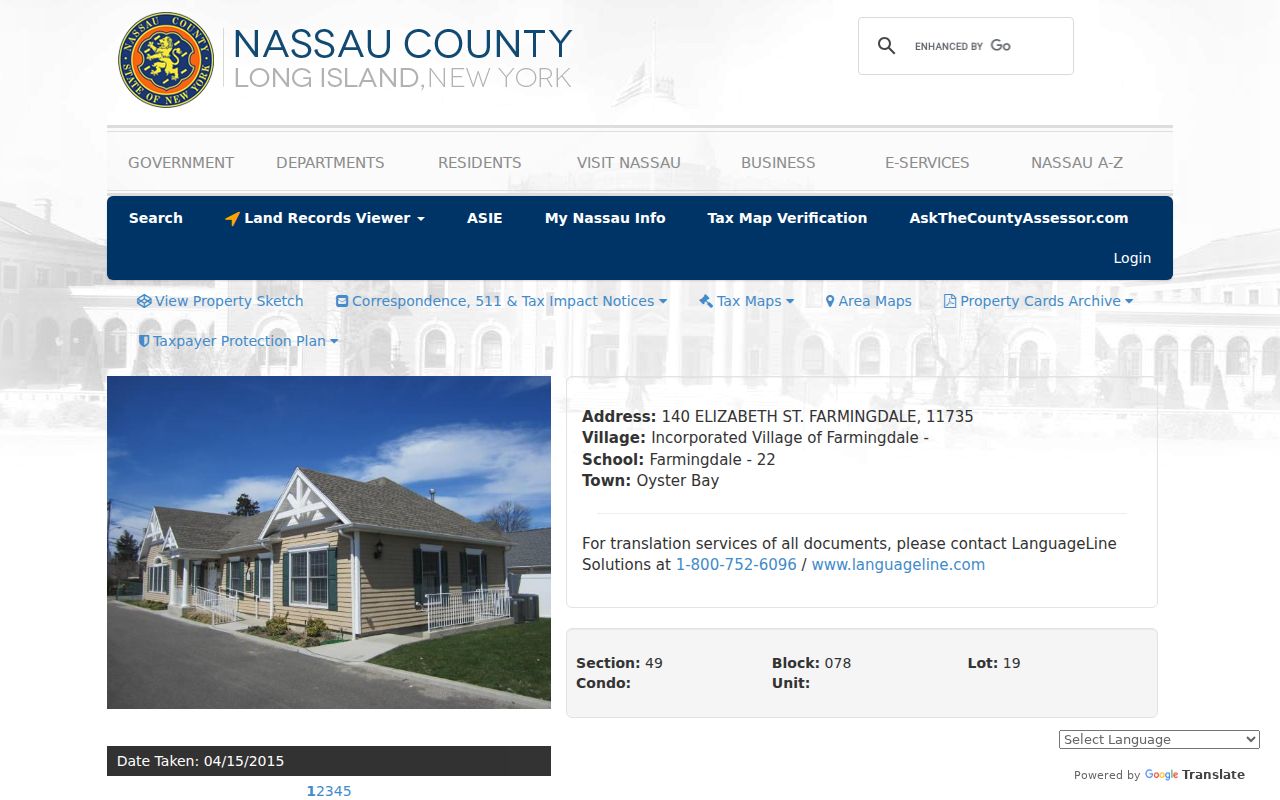
A parcel card is a strong first step, but only the Clerk's most recent deed proves the recorded transfer behind the current owner of record.
Read LLC, Trust, and Estate Owners Carefully
An LLC or corporate grantee needs one more step. Search the exact legal name in the New York Department of State entity database, where entity status and a service-of-process address help identify the organization, though neither proves where a person lives. A registered agent is not the beneficial owner.
Trust deeds name a trustee and a capacity. Do not guess at beneficiaries. Estate ownership may connect to Nassau Surrogate's Court and WebSurrogate, though sealed or unavailable documents still require the courthouse route. These sources explain authority. The recorded deed remains the land-transfer source.
Handle Nassau County Ownership Exceptions Without Guessing
Some parcels resist a single personal name. A deed may vest title in spouses, multiple tenants, a trustee, an estate representative, a corporation, or an LLC. Copy the grantee exactly. Copy the stated capacity too. Never swap a trust for a presumed beneficiary or an entity for its registered agent. The New York entity database can confirm an organization's legal name and status, but it cannot replace the conveyance itself.
A condominium unit may carry its own lot or unit detail while sharing common interests. A cooperative interest looks different still. The County Clerk map room specifically lists condominium and cooperative maps, so use those records when the parcel card or a simple GIS polygon cannot explain the structure. Vacant land, grouped lots, and split or merged parcels need date-sensitive comparison. The present SBL may not match the identifier on an older deed.
Estate transfers can create a temporary mismatch. WebSurrogate or the Nassau courthouse may identify a proceeding and fiduciary authority. An executor's deed records the land transfer. Foreclosure research takes care as well. A notice of pendency and a sale calendar show stages in a case, not necessarily the current owner. Confirm the referee's or later deed in the Clerk index before changing the ownership conclusion.
A recently signed deed not yet recorded cannot be confirmed in the public index. A deed recorded after the annual roll snapshot leaves the assessment owner lagging. Note both dates. State which source supplies each name. For a high-stakes transaction, an attorney or title company should search the complete chain and any outstanding interests. The public workflow finds the likely recorded owner. It is not a title certification.
State the Nassau Ownership Answer Precisely
A solid ownership answer leads with the grantee named on the latest deed. Add the recording date and reference. Then tie that deed to the matching parcel number and situs address. Note what the assessment roll's owner field says, along with its year. When sources disagree, say so plainly.
A timing gap between the deed records and the tax roll often explains the mismatch. Pointing that out beats quietly picking one. Stick to what the public property records actually establish. A parcel record shows a recorded interest. It does not show who lives there or who manages the site. Skip claims about residence, family ties, or beneficial ownership. Precision keeps the answer easy to audit and fair to the owner of record.
Owner note: Always include the source date.